Description
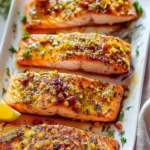
Baked Dijon salmon is a quick, healthy, and flavorful dish featuring tender salmon fillets glazed with a tangy-sweet blend of Dijon mustard, honey, lemon, and garlic. Ready in under 25 minutes and perfect for weeknights or elegant dinners. Naturally gluten-free and easily made vegan or lower-sugar.
Ingredients
For the Glaze:
– 2 tbsp Dijon mustard
– 1 tbsp honey (or maple syrup for vegan)
– 1 tbsp fresh lemon juice
– 1 tbsp olive oil (or avocado oil)
– 2 garlic cloves, minced
– Salt and black pepper, to taste
For the Salmon:
– 4 (6-oz) salmon fillets, skin-on or skinless, patted dry
For Garnish (optional):
– Fresh parsley or dill, chopped
Instructions
- Preheat oven to 400°F (204°C). Line a baking sheet with parchment paper or lightly grease it.
- In a small bowl, whisk together Dijon mustard, honey, lemon juice, olive oil, garlic, salt, and pepper until smooth.
- Place salmon fillets on the baking sheet, skin-side down if skin is on.
- Spoon the glaze evenly over the top of each fillet, spreading gently to coat.
- Bake for 12–15 minutes, or until salmon flakes easily with a fork and reaches an internal temperature of 135°F (57°C) at the thickest part.
- Remove from oven. Garnish with fresh parsley or dill, if desired.
- Serve immediately.
Notes
Notes
– Use fresh, high-fat salmon (like King, Sockeye, or Atlantic) for best texture and moisture.
– Do not overcook salmon continues to cook slightly after removal from oven.
– Vegan option: Substitute honey with pure maple syrup or agave nectar.
– Gluten-free: Naturally GF, just verify Dijon mustard label (most are GF, but some brands contain trace wheat).
– Make ahead: Glaze can be prepared up to 24 hours in advance; store covered in the fridge.
– Acid tip: Apply glaze just before baking to prevent lemon juice from “cooking” the surface of the fish.
- Prep Time: 5 minutes
- Cook Time: 14 minutes
- Category: Main Course
- Method: Baking
- Cuisine: American / French-inspired
Nutrition
- Serving Size: 1 salmon fillet with glaze
- Calories: ~320
- Sugar: 6g
- Sodium: 480mg (varies with mustard and salt—use low-sodium mustard to reduce)
- Fat: 18g
- Saturated Fat: 3g
- Unsaturated Fat: 13g
- Trans Fat: 0g
- Carbohydrates: 8g
- Fiber: 0g
- Protein: 34g
- Cholesterol: 95mg